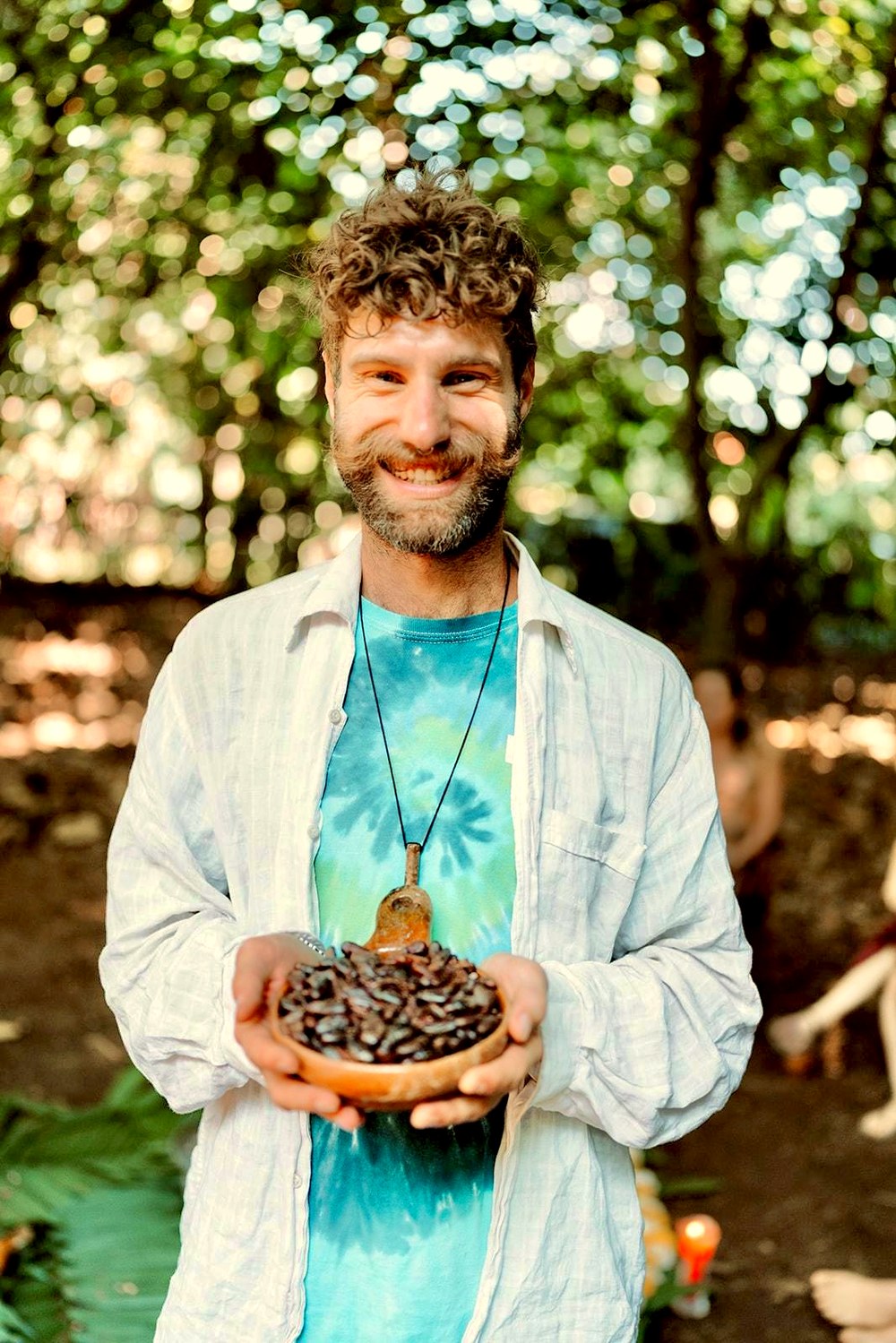
Operations & systems consulting for retreat centers, eco-villages & intentional communities
Helpingmagicalplacesstaygrounded.
I build the operational backbone your center is missing. Infrastructure projects, team coordination, guest booking, and the handoffs between them, designed for how your place actually runs and handed to your team to own.
Operations Manager, then Ceremony Temple Manager, at a working off-grid retreat center on Lake Atitlán, Guatemala.
10years
Product, project, and business development in clean energy, at Siemens, Enel, WeaveGrid, and earlier startups.
2degrees
B.S. in Electrical & Computer Engineering and M.S. in Business & Engineering Management, University of Rochester.
I have run this work from both sides: the engineering rigor of venture-backed companies, and the daily reality of a center where the schedule, the kitchen, the ceremony space, the solar array, and quite a bit of magic all have to line up.
The pattern
You didn't start this to become an operations manager.
At ten guests a month, holding everything in your head is okay. Everyone knows everyone, decisions are fast, and the informal way of doing things is part of the charm.
At forty, that same informality becomes the ceiling. Bookings come from a website, go to a spreadsheet, a whiteboard, and a WhatsApp thread, none of which agree. The contractor quote nobody checked turns into a build that runs over. Every season you rebuild the same process from scratch because nobody wrote down last season's, and the person who knew it left in March.
None of that means you did something wrong. It's what happens when something built on heart grows faster than its infrastructure. But it costs real money and real people: double bookings, burned out coordinators, and founders doing admin at midnight instead of the work only they can do.
The fix isn't more hustle, and it isn't corporate software bolted onto a sacred space. It's systems built for how your community actually works, built once, and handed to your team to run.
What I do
Three places where centers usually break.
Every engagement is shaped to your center, but the work almost always lands in one of these. Most places start with one and find the others follow.
Projects & infrastructure
Feasibility, cost, and scope modeling before you commit money
Vendor scoping, bid review, and contractor management
Solar, water, and utility system evaluation
Project oversight from specification through commissioning
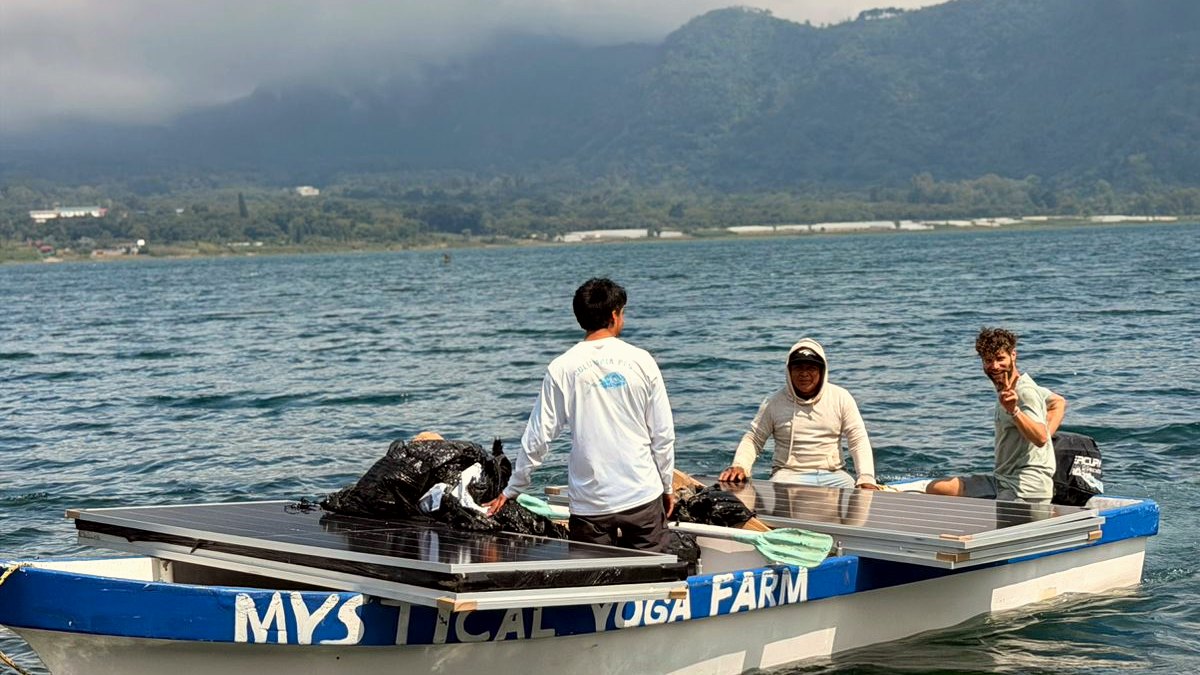
Nearly three years at the Mystical Yoga Farm on Lake Atitlán, Guatemala: off-grid, boat access only, 10+ local staff, 10 to 15 rotating international volunteers, and a full program calendar. Three of the projects I ran there.
Projects & infrastructure
Rebuilding the power system for a farm with no road access.
The farm ran out of electricity most nights. The array was six aging 300 watt panels feeding a bank of degraded gel batteries, and the whole property rationed around it. Appliances got scheduled. Phones charged in shifts. Solar vendors had come and gone for years, delivering bad equipment and disappearing when it failed.
What I did
Specified the full replacement: array sizing, battery chemistry and capacity, inverter rating, and wiring
Selected and managed a single vendor, chosen on reference after years of bad experiences, and held the scope through delivery
Ran the project on site, in Spanish, on a property reachable only by boat
Extended the same project into hot water and water systems: a new solar water heater with a second vendor, new shower piping and connections, and an upgrade to water delivery, pumping, and filtration
Array
6.2 kWwas 1.8 kW, roughly 3.5x
Storage
20 kWh lithiumreplacing degraded gel
Inverter
6 kVAnew install
Budget
Under $15kdelivered under budget
The farm now runs a surplus, including through rainy season. It powers a commercial kitchen, new lighting through every bathroom and along the paths, safer circuits in the residential areas, and device charging for a community of 50 plus. Nobody schedules the blender anymore.
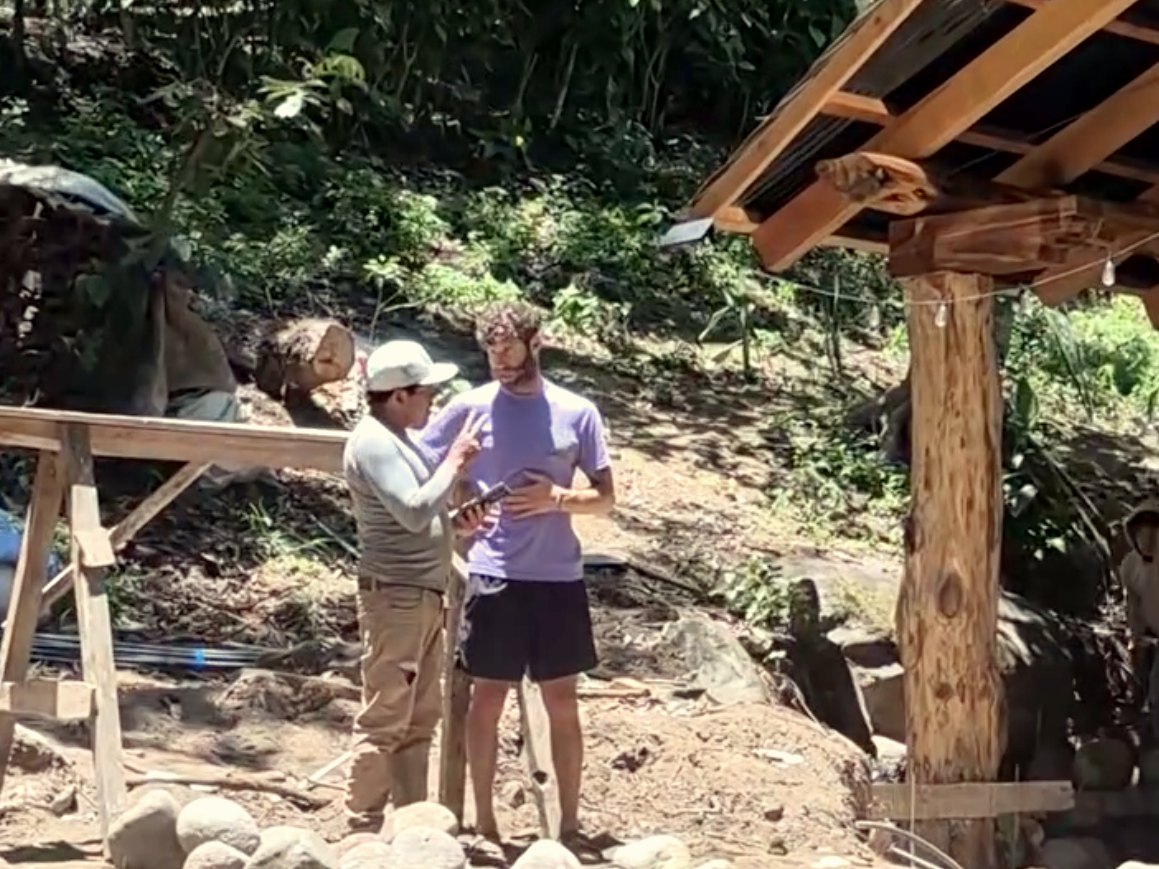
Panels arrive by boat. Scoping the install with the contractor, in Spanish.
Team & coordination
Building a system that survives a team that turns over every 30 days.
There was no project management system. Tasks lived in WhatsApp threads, on whiteboards, and in whoever's head had heard about them. That's workable for a stable team. It isn't for this one: volunteers rotate roughly every 30 days, and managers cycle every three to six months. Every rotation used to take a piece of the farm's operating knowledge with it, and the next person rebuilt it from nothing.
What I did
Designed and stood up the farm's first project management system, structured around ownership and recurring operations rather than personalities
Built it in about a week, then ran training and adoption across the team over the following months
Trained roughly 8 people directly, including the local staff leads who would carry it after I stepped back
Set it up so shared reference information lives in the system instead of in a departing manager's memory
How the system is structured
Property & maintenance Ops lead
Recurring inspectionsWeekly
Repair queue, by area
Bodega & supply reorder
Programs & guests Program lead
Arrivals & departuresPer group
Space and schedule holds
Kitchen & dietary handoff
Projects & builds Assigned
Scope, budget, vendorDated
Blocked items, visible
Close-out notes
Lanes are organized by function and owner, not by person, so a role can change hands without the work disappearing with it.
The point was never the tool. It was that the knowledge stopped walking out the door every month. A new volunteer can see what is theirs on day one, a departing manager hands over a system instead of a conversation, and information moves across a group of 10+ local staff, 10 to 15 volunteers, and 5 or more work traders without living in anyone's head.
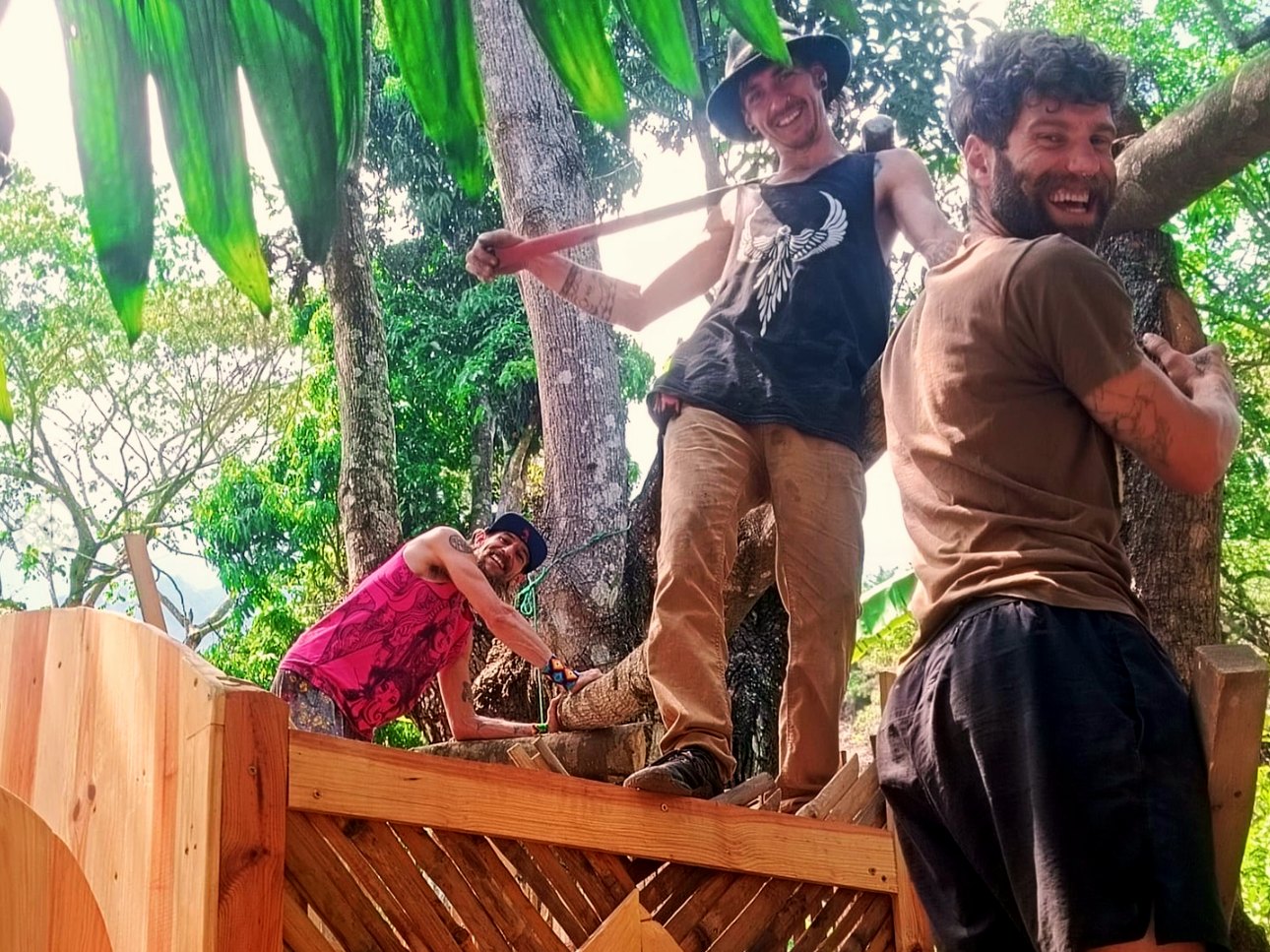
The crew mid-build. The system exists so the work outlasts whoever's holding the drill.
Guests & programs
Replacing a booking stack that couldn't describe the business it was running.
The farm sells stays, ceremonies, teacher trainings, volunteer placements, temple rentals, and hosted retreats. It was all running on WordPress with a booking plugin, propped up by whiteboards, spreadsheets, and WhatsApp. The plugin technically took bookings. The actual operation lived on paper and in people's heads.
What was breaking
No single source of truth. One booking could exist in the plugin, on a whiteboard, in a spreadsheet, and in a chat thread, with none of them agreeing
No way to model a flexible room. A cabin sellable as a single or a double is one physical unit with two sellable configurations, and double-booking was prevented by staff memory
No way to model ceremony capacity separately from rooms, even though ceremony seats are their own fixed resource and guests sometimes sleep in the ceremony space
No concurrency safety. Last-seat and last-room races were check-then-hope
Payments scattered across cash, Stripe, PayPal, and Wise transfers in two currencies, with no central ledger and no per-guest paid-versus-owed view
No approvals pipeline. Ceremony intake, volunteer applications, temple rentals, and retreat host bookings all ran as manual threads
Staff couldn't take a walk-in booking from a phone, on a site with unreliable connectivity and no documented fallback
What I did
I ran a proper evaluation of the established platforms in this space, including Retreat Guru and Bookinglayer. All were dated architecturally, heavy with features the farm would never use, and none could handle flexible room inventory or ceremony capacity as an independent resource. That evaluation is the deliverable a lot of centers actually need, and sometimes it ends with buying software. Here it ended with building.
Phase one, public site and CMS: information architecture rebuilt around real visitor journeys (stay, ceremony, retreat, volunteer, host, events), a design system, full content migration, page-level 301 redirect mapping to protect organic traffic, a self-archiving events schedule, and analytics with conversion events on every booking path
Phase two, booking and operations: accommodation, ceremony, volunteer, temple rental, retreat host, and drop-in event flows, plus a staff admin portal with an occupancy calendar, approvals queue, walk-in booking, a central multi-currency payment ledger, and a daily dashboard
Built to hold under load: concurrency-safe capacity enforced at the database level, full booking lifecycle from pending through check-out and close-out, and row-level security on sensitive intake data
Cut over without gambling the season: public site first, booking system running in parallel internally through high season, then public booking cutover
Stack
Next.jsTypeScriptPayload CMSPostgres on NeonStripePayPalResendVercel
Every account is owned and billed by the center from day one. No agency lock-in, no credentials sitting with a consultant, nothing the farm can't take over the day it wants to. That's how I set up everything I build.
The scale behind all of it
What was actually moving through the place.
Five yoga teacher trainings a year, alongside eight to ten hosted retreats, with groups running 8 to 20 people
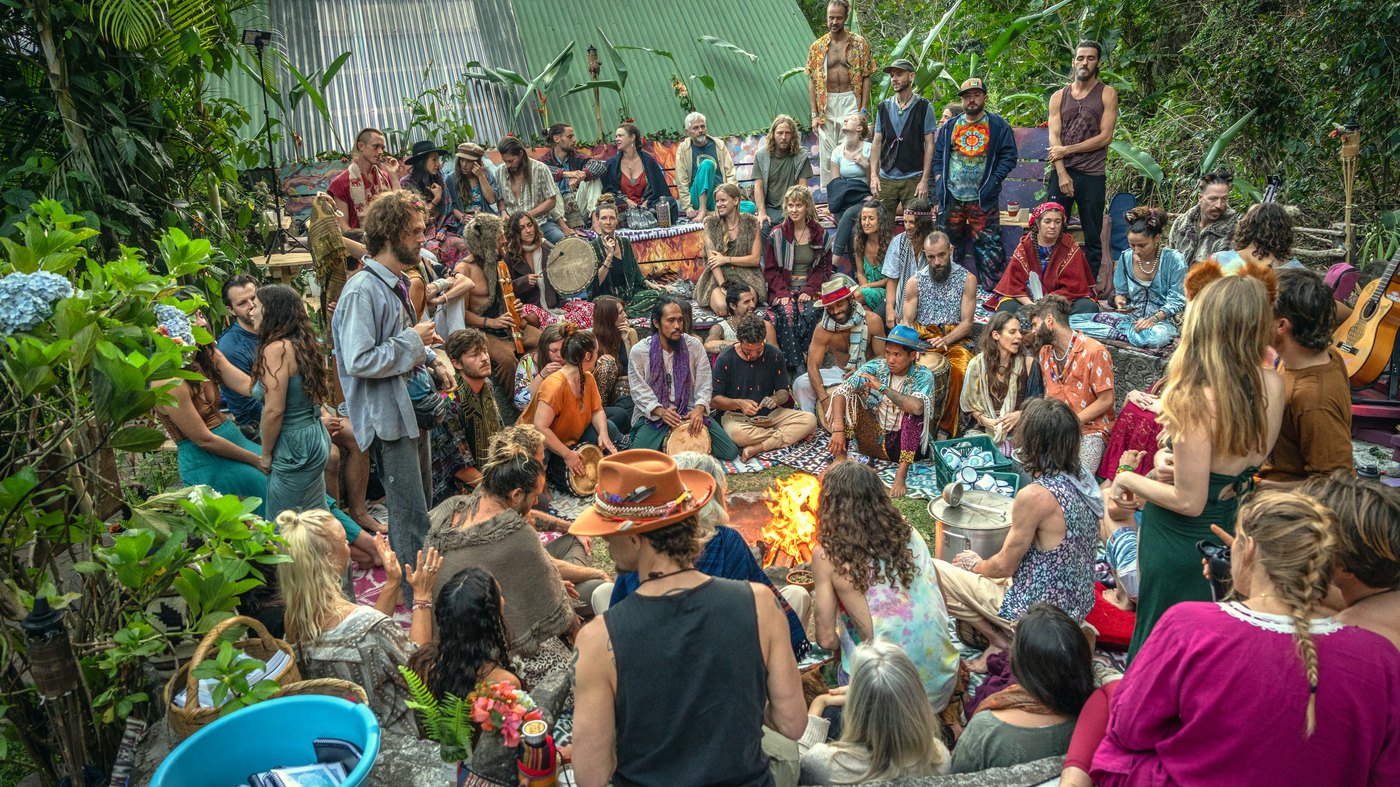
The Heartsong Festival: 200+ people in total across the gathering, 80+ through the multi-day core, around 8 facilitators, and roughly 10 workshops a day, all arriving by boat
Coordination of retreat groups, including schedules, spaces, and dietary needs
A standing team of 10+ local staff managed in Spanish, 10 to 15 international volunteers at any time, and 5 or more work traders
The Heartsong fire circle. Everyone here arrived by boat.
How it works
Diagnose. Build. Hand off.
A simple arc, mostly remote, on a timeline that respects your season.
First
We map what's real
Conversations with your team, a walk through your tools and your numbers, and an honest look at what's working, what's breaking, and what matters enough to protect. Usually the leak isn't where you think it is.
Then
I do the heavy lifting
You keep running your center. I design and build the actual thing: the system, the flow, the project plan, the documentation. Not recommendations. I check in at every decision that touches your culture, so nothing lands that doesn't fit your place.
Finally
Your team owns it
Training, plain-language documentation, and a transition where I'm still on call. Accounts and access in your name from the start. The goal isn't to make you need me. It's to make you free of me.
Most of this runs remotely through calls, shared docs, and regular check-ins. For the right project, I never say no to a good excuse to show up in person.
About
Why "grounded" isn't just a word here.
I spent a decade in clean energy, in product, project, and business development roles at companies ranging from early startups to Siemens and Enel. My training is in electrical and computer engineering, where grounding is literal: the wire that gives a powerful system somewhere safe to put itself, as well as business management and entrepreneurship.
Then I moved to the Mystical Yoga Farm on Lake Atitlán and spent nearly three years inside a working retreat center, as Operations Manager and later Ceremony Temple Manager. I learned the thing no spreadsheet teaches: how a schedule, a kitchen, a volunteer crew, a solar array, and a ceremony space actually fit together, and what it takes to hold all of it steady without flattening the spirit of the place.
That's the combination I bring to your center. Engineering rigor from the startup world, lived understanding from the retreat world, and a steady presence when things feel chaotic, which is usually exactly when I get the call.
Every magical place needs a grounding wire.
Let's talk
Tell me about your place.
Tell me what's breaking and I'll tell you honestly whether I can help. No pitch, no pressure, and if I'm not the right fit I'll say so and try to point you somewhere better.
This works best for centers with something already running: guests arriving, programs on the calendar, a team in place, and systems that haven't caught up yet.